

Why clients don’t rebook (and what its costing your clinic)
You delivered a strong treatment, your client left feeling amazing and said “she would definitely be back”. She wasn’t.
For most clinic owners, that experience is all too familiar, and the cost of it has real impact. A client who visits once represents a cost with no return. A client who returns twice is significantly more likely to become a loyal client. That gap between a first visit and a second one is where clinics quietly lose tens of thousands of dollars a year.
This pattern affects clinic owners at every experience level, and the answer almost never has to do with the quality of your work. The real reason? A missing follow up system.
Here’s how to fix it.
The real reasons clients disappear (its not your facials)
Research into client retention in skin clinics points to four consistent causes:
1. She didn’t leave with a plan.
She experienced a treatment, not a pathway. When there’s no named protocol, explained timeline or outcome to work toward, coming back feels optional rather than purposeful. “Come back in four to six weeks” is not a clinical recommendation. A structured treatment protocol with a specific goal is.
2. She left overwhelmed or under-supported.
Too many recommendations at once produce the same result as too few: inaction. A client who finishes her appointment with five products, three options, and an open-ended rebooking suggestion often follows through on none of them. See this article for more on the trend.
3. The rebooking process created friction.
Every extra step between interest and a confirmed appointment costs you. Back-and-forth availability, unclear pricing, and no direct booking link all work against retention. A convenience strategy is pure gold when it comes to retention.
4. The consultation felt generic rather than considered.
If the recommendations could have applied to any client who walked through the clinic doors, they probably felt that way. A client who doesn’t feel genuinely assessed doesn’t have enough confidence in the prescription to commit to a series.
How to build a rebooking system that runs without you
01 Audit your rebooking rate
Pull your last 90 days of booking. How many first-time clients returned for a second visit? If you don’t know this number, find it before you do anything else as it will be your baseline.
02 Introduce one treatment protocol
Pick your most common skin concern, lets say its Acne, and build a multi-session protocol around it. When a client is enrolled in a protocol, the rebooking question disappears as the next session is already part of the plan.
03 Set expectations at consultation
Before the treatment starts, tell the client how many sessions her concern typically requires and what she should expect to see and when. That conversation builds clinical authority and gives her a reason to stay committed.
04 Build the rebooking prompt into the therapist’s close
Train your team to ask before the client leaves the treatment bed, not at the front desk. “To keep your results on track, I’d recommend we book your next session now for four weeks’ time”.
05 Set up automated aftercare emails
Configure a post-appointment email for each of your hero services. Include two or three aftercare steps, a personal note, and a booking link. It should go out within 24 hours of the appointment.
06 Automate your rebooking reminders
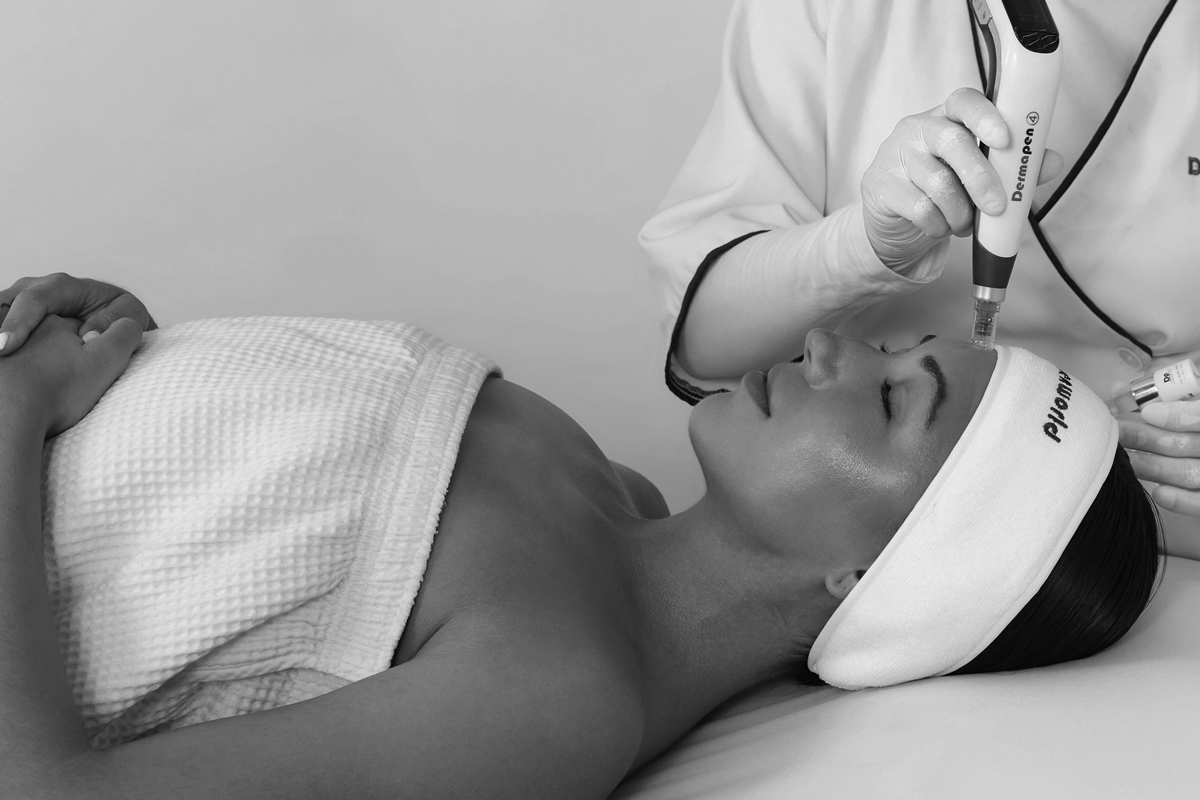
Map each service to its ideal follow-up window: facials four weeks, peels five to six weeks, microneedling four to six weeks, body treatments four to six weeks. Set the reminder to send automatically with a booking link. Once it’s built, it runs without your team having to think about it.
07 Track it monthly
Compare your rebooking rate month over month. A five to ten percent improvement over a quarter translates to meaningful revenue without a single additional new client.
The number that makes the case
For a clinic treating 30 new clients a month, recovering four or five of those into a second visit, and then a series, changes what each room earns without spending much at all on new client marketing.
The clients are already in your clinic. If you’re not sure where to start, your BDE can help you identify the gaps and put a system in place to bring them back.
Frequently asked questions
A healthy rebooking rate from first visit to second visit sits above 50 percent. Industry-wide, average rebooking rates sit around 52 percent in Australia and 57 percent in New Zealand, according to Kitomba’s benchmark data. If you don’t know your current rate, pull your last 90 days of data and use it as your baseline before making any changes. The gap between average and good is worth closing: clients who rebook immediately are reportedly up to 70 percent more likely to become long-term, loyal clients.
Why do clients not rebook after their first facial?
Most clients don’t rebook because the appointment didn’t give them a clear reason to. No named protocol, no explained timeline, no specific next step. A great treatment creates a good impression. A structured plan creates a return visit.
The most effective approach is building retention into the appointment itself rather than following up after the fact. Structured treatment protocols, a therapist-led rebooking prompt before the client leaves the treatment bed, and an automated aftercare email within 24 hours address the three most common points where clients drop off. Automated SMS rebooking reminders alone have been shown to lift rebooking rates by around 11 percent.
Start with one change: introduce a multi-session protocol for your most common skin concern. When a client is enrolled in a protocol, the rebooking decision is already made. Add automated reminders mapped to each service’s ideal follow-up window and your retention system largely runs itself. Worth noting: close to 37 percent of online bookings happen outside regular business hours, so a system that works while the front desk is closed is doing real work for you.
Within 24 hours. A short message with two or three aftercare steps, a personal note, and a direct booking link. This is the step most clinics skip and one of the highest-leverage retention moments available.